


 Return
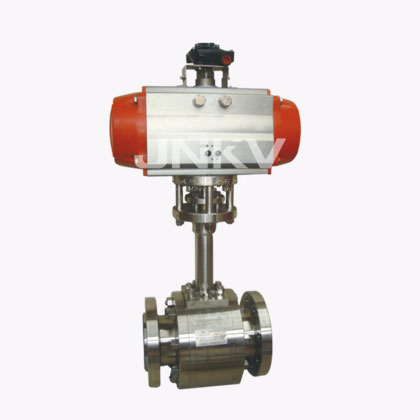

Forged Steel Cryogenic Ball Valve
Product Model: DQ641Y
Nominal Diameter: DN15–600 mm
Nominal Pressure: PN1.6–16.0 MPa
Applicable Temperature: -46°C, -196°C
Applicable Media: Liquid oxygen, liquid nitrogen, liquid argon, LNG, liquid carbon dioxide, liquid propane
Main Material: LCB, LC3, CF8
Overview
Forged steel cryogenic valves have two bonnet design types. The first is the bolted bonnet; in this design, the body and bonnet are connected by bolts and nuts, and sealed with a spiral wound gasket (made of 316 stainless steel with flexible graphite). A metal ring connection can also be used if the customer has special requirements. The second design is the welded bonnet; in this design, the body and bonnet are connected by threads and fully welded for sealing. A fully welded connection can also be used if the customer has special requirements. Gate valves, globe valves, and ball valves can all be designed as cryogenic valves. To enable use at extremely low temperatures of -196°C (-320°F), valves are generally designed with an extended bonnet.Design Features
Due to the particularity of the media and operating environment, cryogenic ball valves have significantly different structural design features from other types of valves.(1) Extended Bonnet and Drip Plate Design
The bonnets of cryogenic extended-bonnet ball valves adopt an extended design. The extended bonnet design keeps the valve operating handle and packing installation position away from the low-temperature zone, which not only prevents frostbite during valve operation caused by the low temperature of the medium but also allows the valve packing to work at normal temperatures, ensuring that the packing will not be damaged by frost and cause packing fracture failure. The cold insulation layer of cryogenic valves is relatively thick, and the extended bonnet also ensures space for cold insulation construction and keeps the packing gland outside the insulation layer. When adding packing and tightening the gland bolts, there is no need to damage the insulation layer.
On the extended bonnet of the cryogenic ball valve, a drip plate design is adopted. The drip plate needs to be set outside the cold insulation layer to prevent condensed water droplets from falling onto the insulation layer and the upper part of the valve body, protecting the insulation layer and preventing the loss of cooling energy.(2) Fire-safe and Anti-static Design
Since cryogenic ball valves are generally used in flammable and explosive media, fire-safe and anti-static designs are particularly important and are indispensable components of the cryogenic ball valve structure. The fire-safe design of cryogenic ball valves is similar to that of ordinary ball valves, using graphite sealing rings for sealing in all links. The anti-static design adopts a spring-type structure to avoid the explosion danger caused by the accumulation of static electricity.

